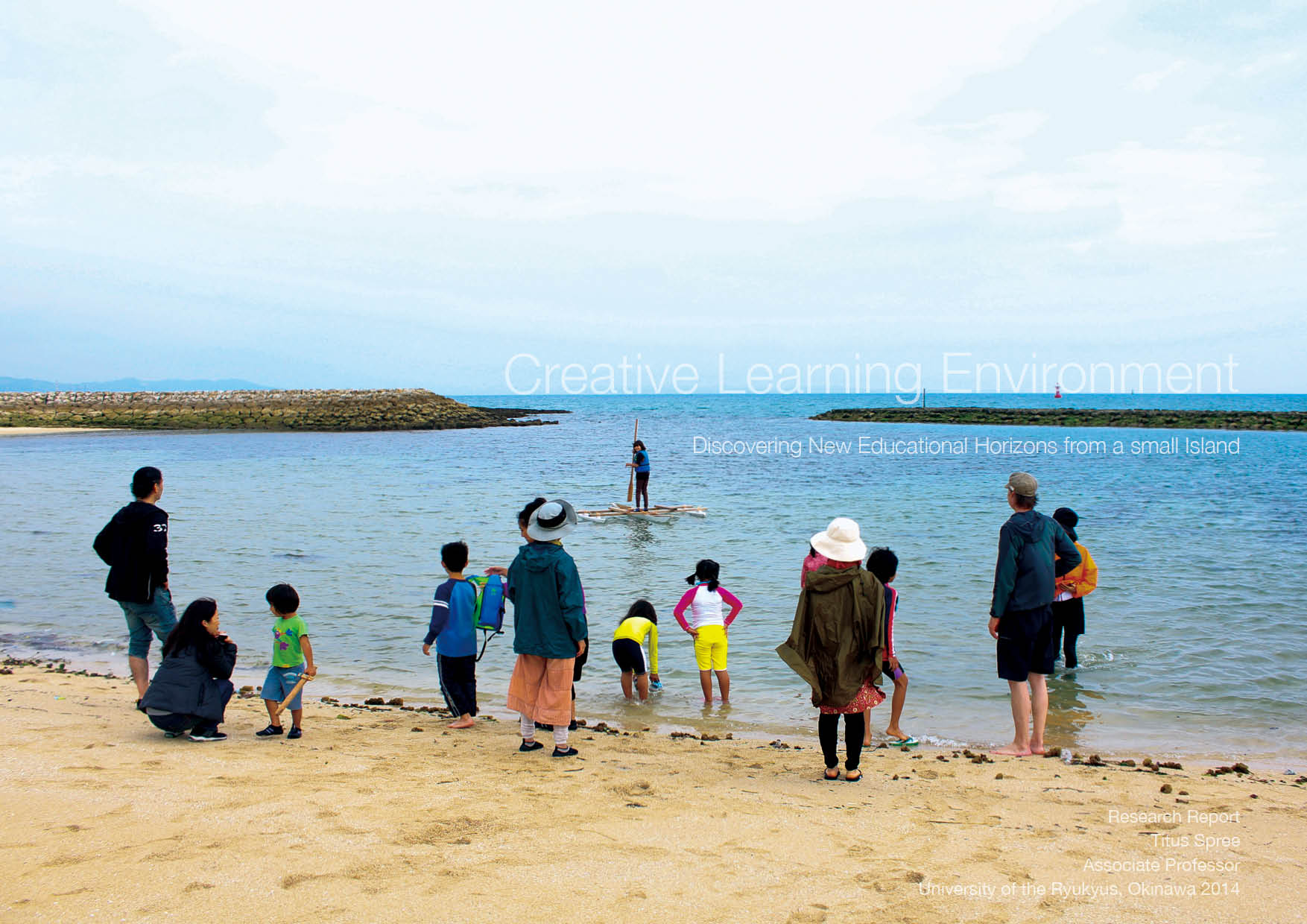
Creative Learning Environment Discovering New Educational Horizons from a small Island
2014 publication
2014 publication






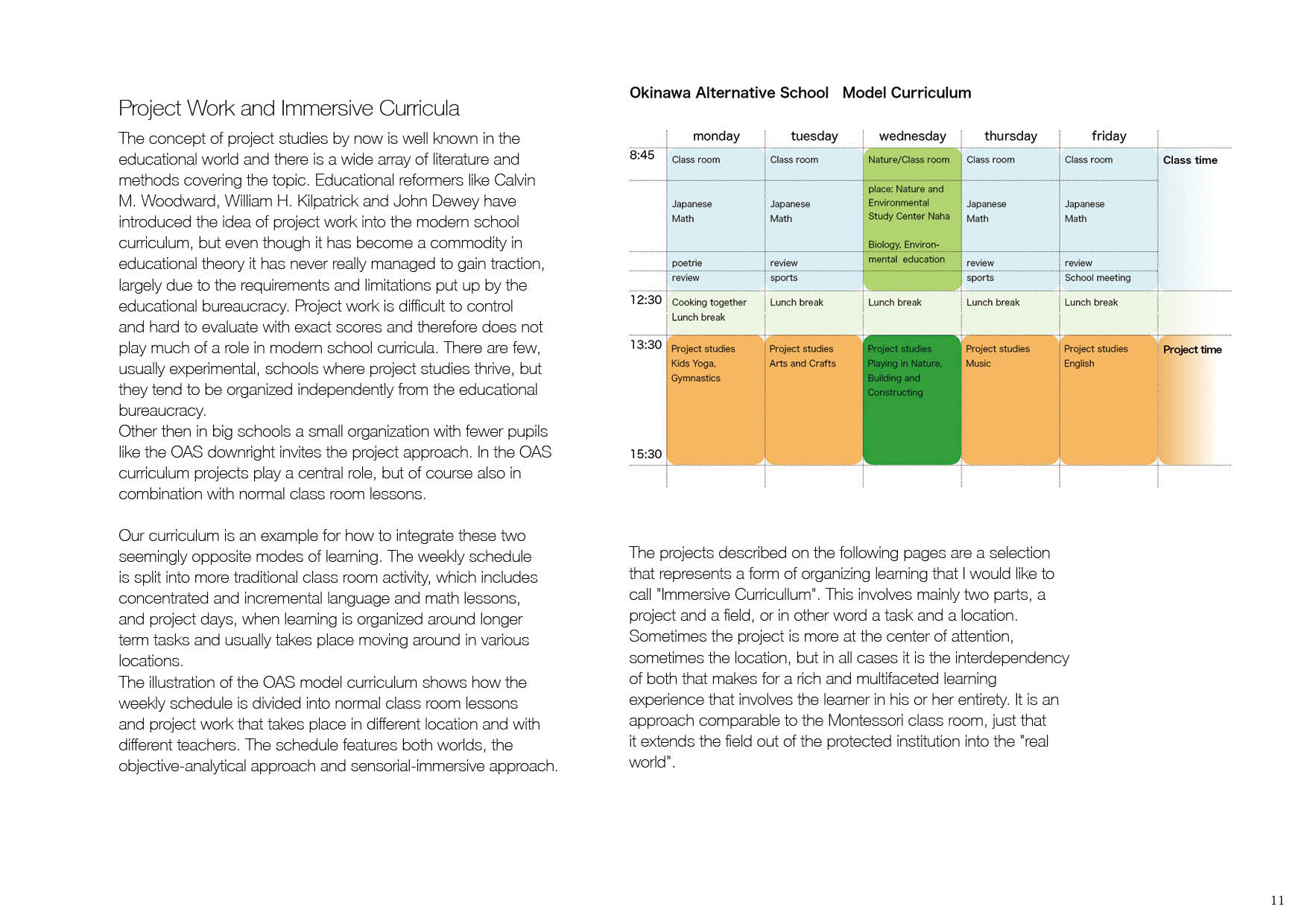
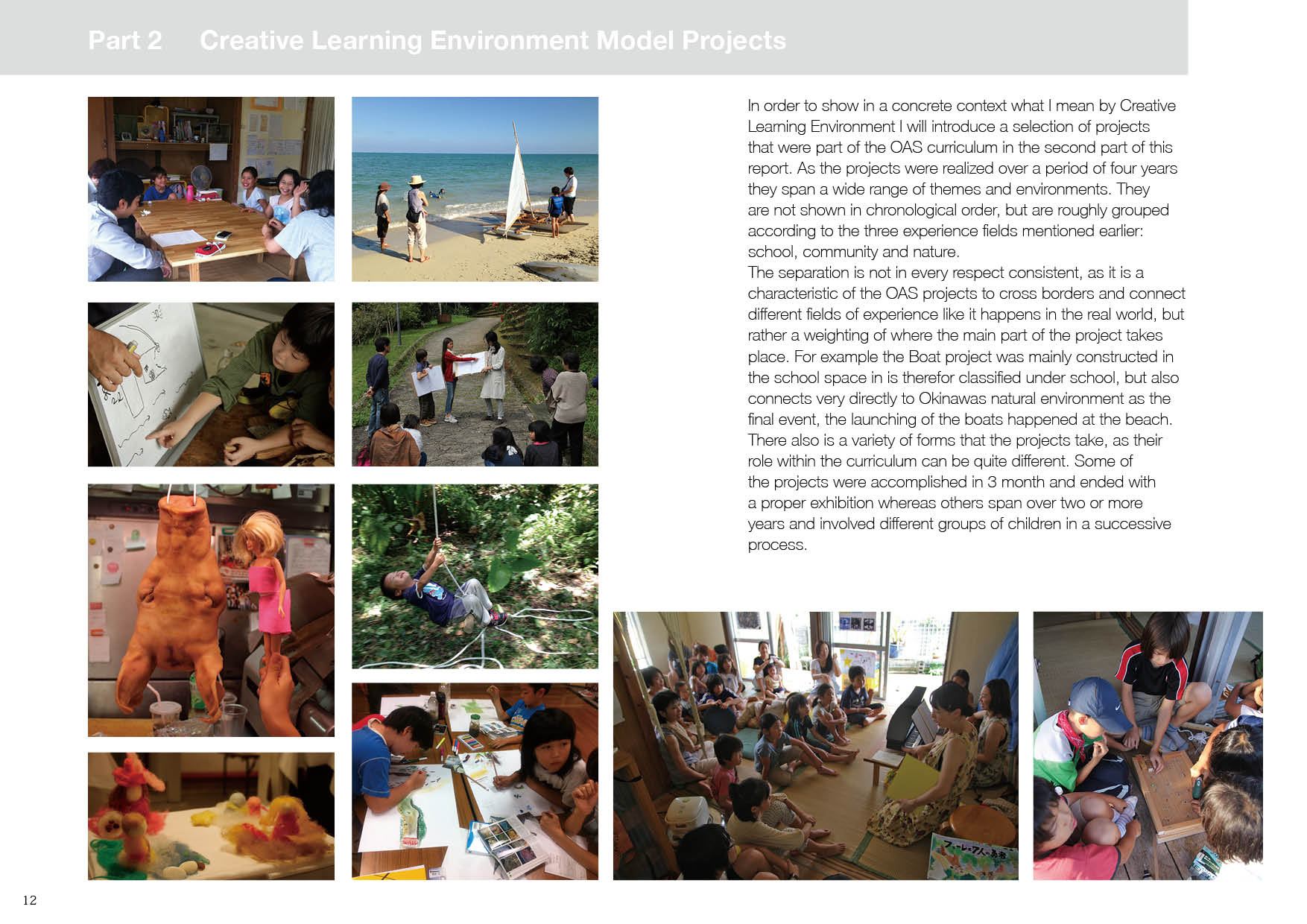


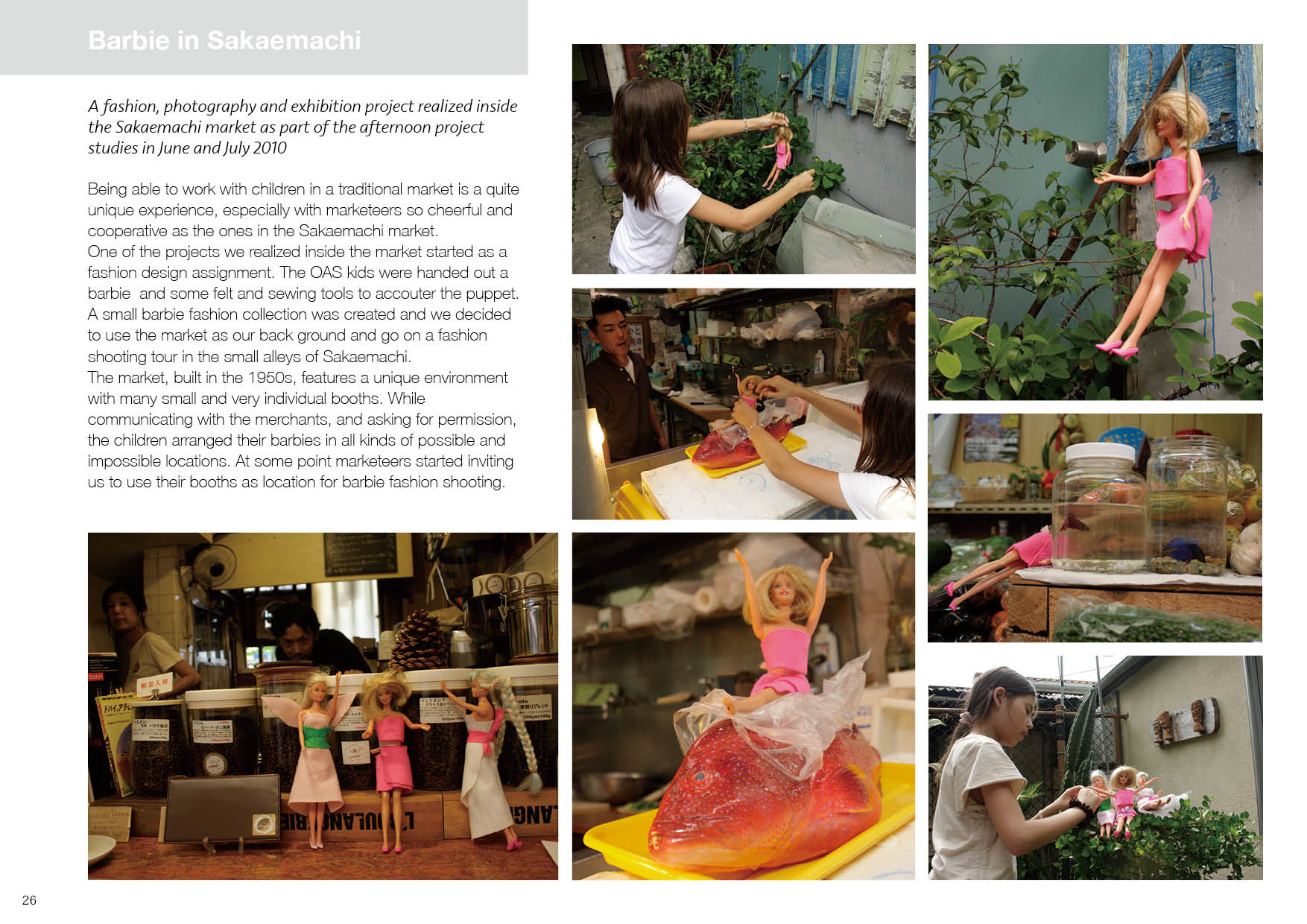


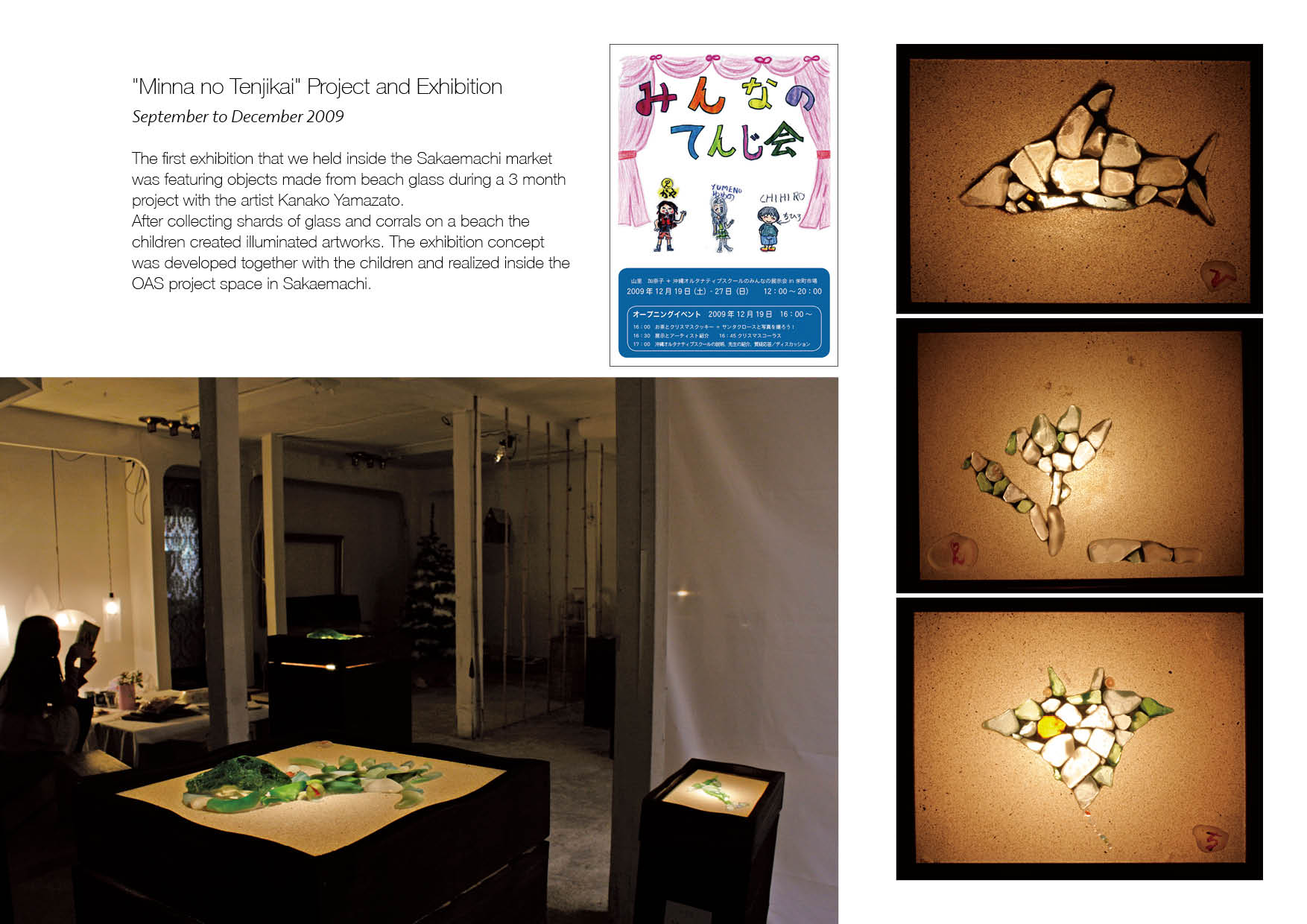









Contentpreview
Abstract
The applied research documented here introduces “Creative Learning Environment" (CLE), an experimental approach towards school education in which learning is defined as a creative process that immerses students in the natural and social environment of their communities.
Documented in the research paper are a variety of activities and projects that were conducted in the framework of an alternative school project in Okinawa, Japan between 2009 and 2014.
The CLE approach was developed based on long years of experience with organizing contemporary art projects as well as with realizing site-specific art works and introduces ways of going about projects common in the field of art to educational practice.
CLE as discussed in the paper is constructed of three overlapping activity fields: school, nature, and community. Learning and teaching is embedded in a dialogical process that enables the agency of the teacher as well s that of the learner.
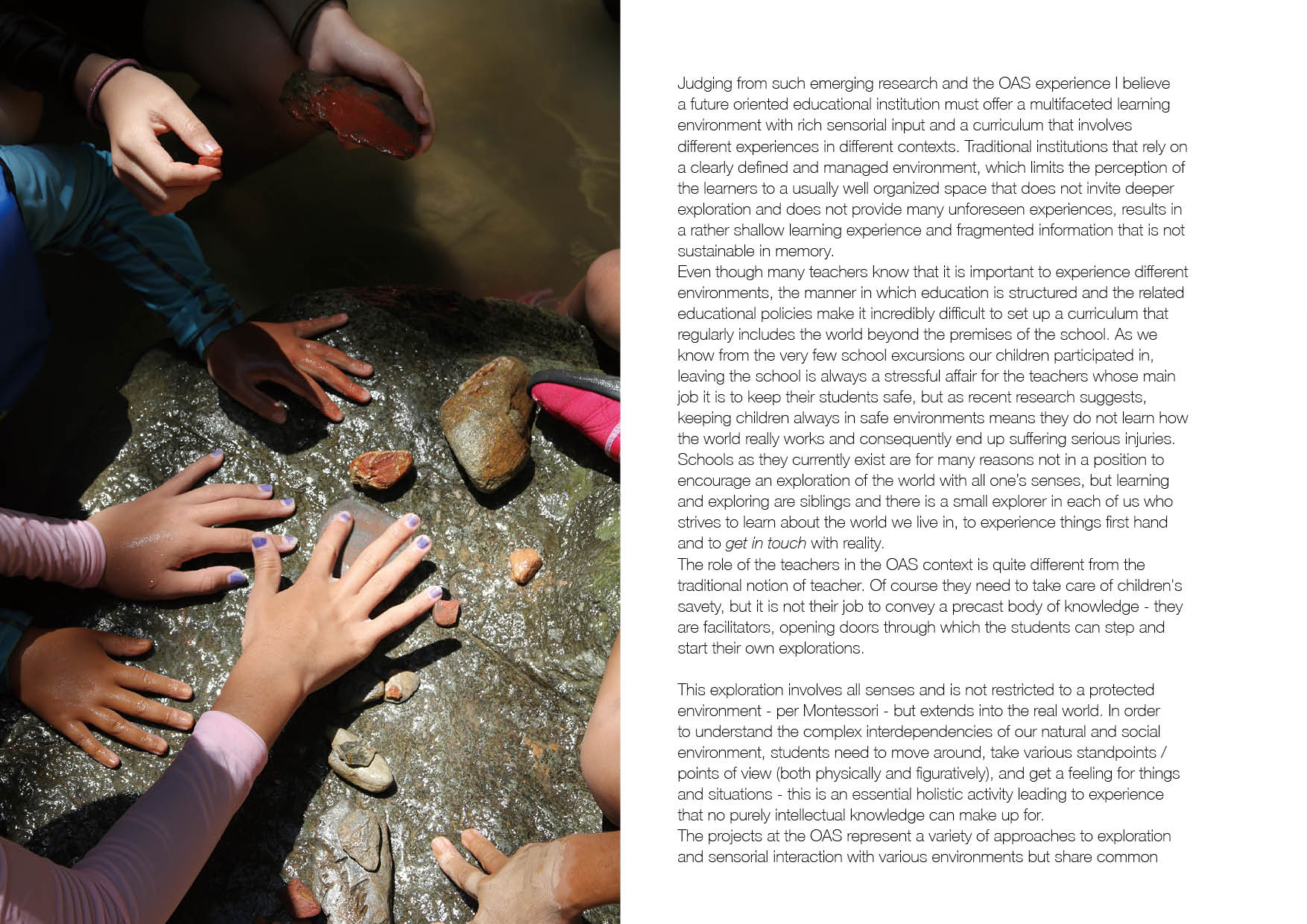
Teachers in the CLE context act less like conveyors of knowledge but more like curators, whose role it is to integrate local culture and nature into a learning environment that extends beyond the premises of the school. The visually rich documentation depicts how an active engagement in different environments in a largely self-directed way can enable the agency of the learner and foster creative interaction with real environments. This research documentation is not to be seen as a manual, but rather as a source of inspiration for how to organize learning in a way that the learner becomes an active and independent participant in an open and locally rooted process of acquiring knowledge and experience.
Documented in the research paper are a variety of activities and projects that were conducted in the framework of an alternative school project in Okinawa, Japan between 2009 and 2014.
The CLE approach was developed based on long years of experience with organizing contemporary art projects as well as with realizing site-specific art works and introduces ways of going about projects common in the field of art to educational practice.
CLE as discussed in the paper is constructed of three overlapping activity fields: school, nature, and community. Learning and teaching is embedded in a dialogical process that enables the agency of the teacher as well s that of the learner.
Teachers in the CLE context act less like conveyors of knowledge but more like curators, whose role it is to integrate local culture and nature into a learning environment that extends beyond the premises of the school. The visually rich documentation depicts how an active engagement in different environments in a largely self-directed way can enable the agency of the learner and foster creative interaction with real environments. This research documentation is not to be seen as a manual, but rather as a source of inspiration for how to organize learning in a way that the learner becomes an active and independent participant in an open and locally rooted process of acquiring knowledge and experience.
Creative Learning Environment Contents
Preface - Purpose of This Report 02
Part 1
Creative Learning Environment
Why Do We Need A Different Learning Environment? 03
Exploring The World with All Our Senses 05
Okinawa Environment 10
Project Work and Immersive Curricula 11
Part 2
Creative Learning Environment Model Projects 12
Project Space School - Immersing in Doing 13
House Project 14
Boat Project 18
Making Chairs and Other Objects 24
Project Space Community - Immersing in Society 25
Barbie in Sakaemachi Market 26
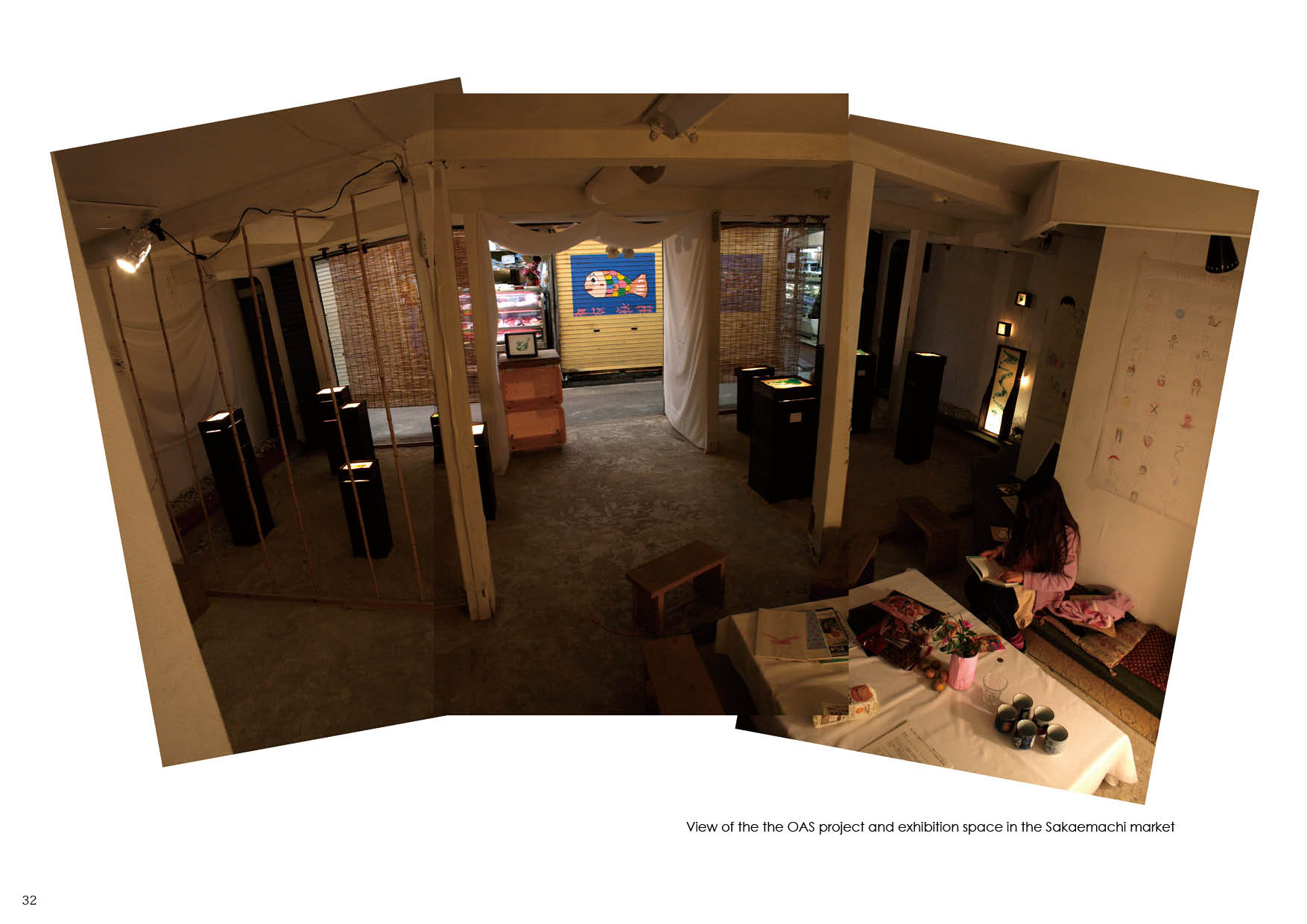
Exhibitions in Sakaemachi 30
Project Space Nature - Immersing in Nature 33
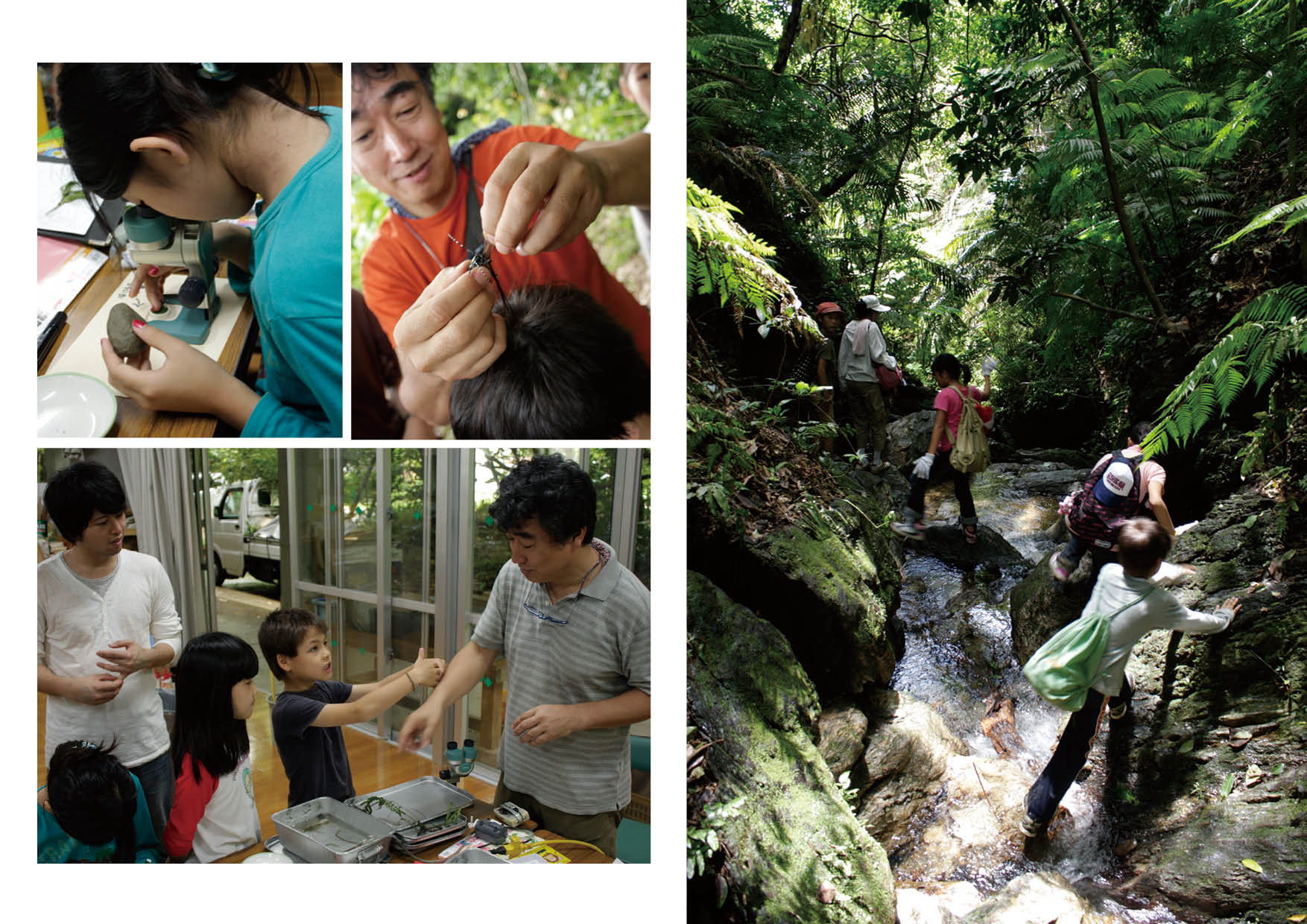
Shizen ni de kara: Exploring Water 34
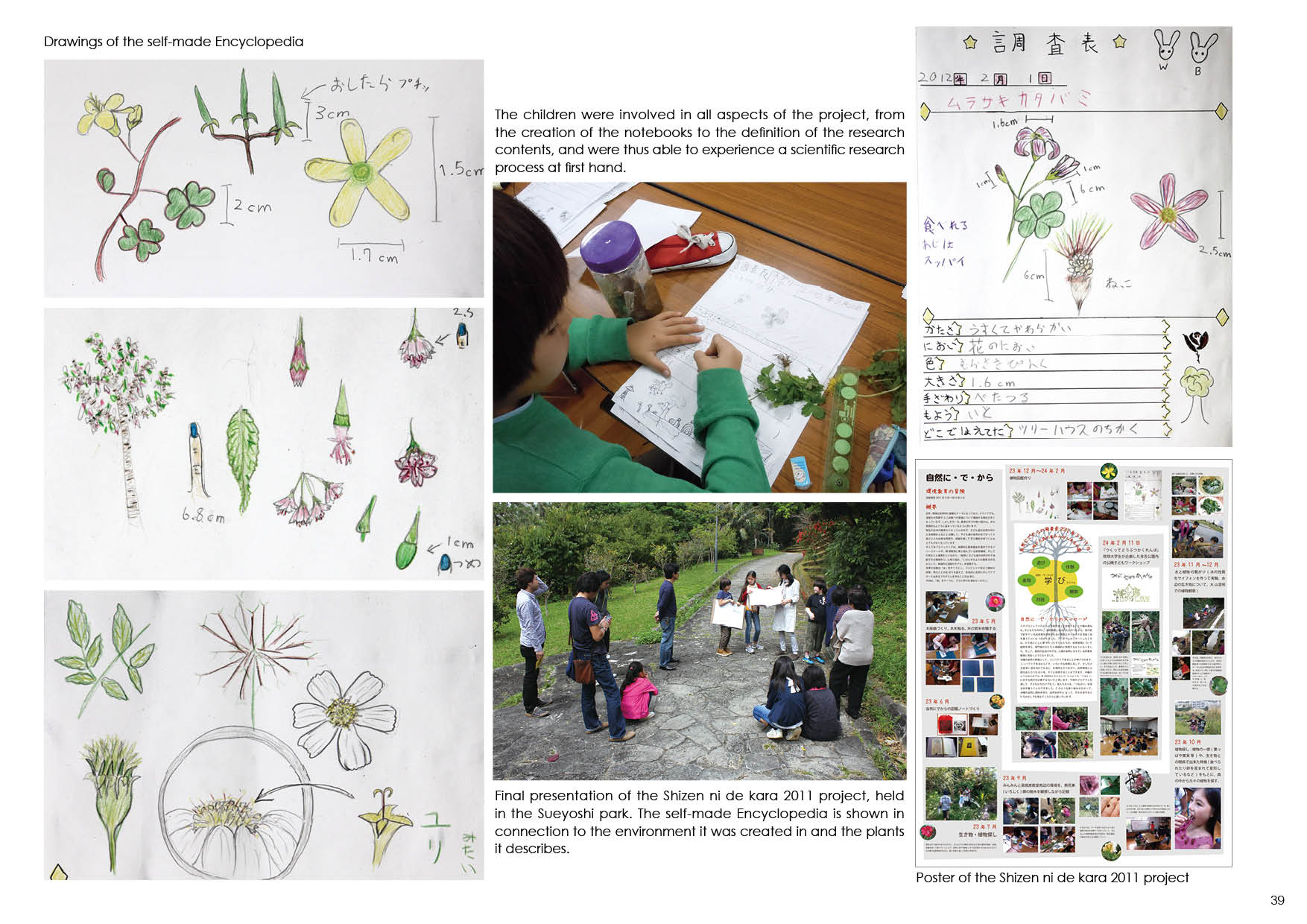
Shizen ni de kara: Exploring Plants 40
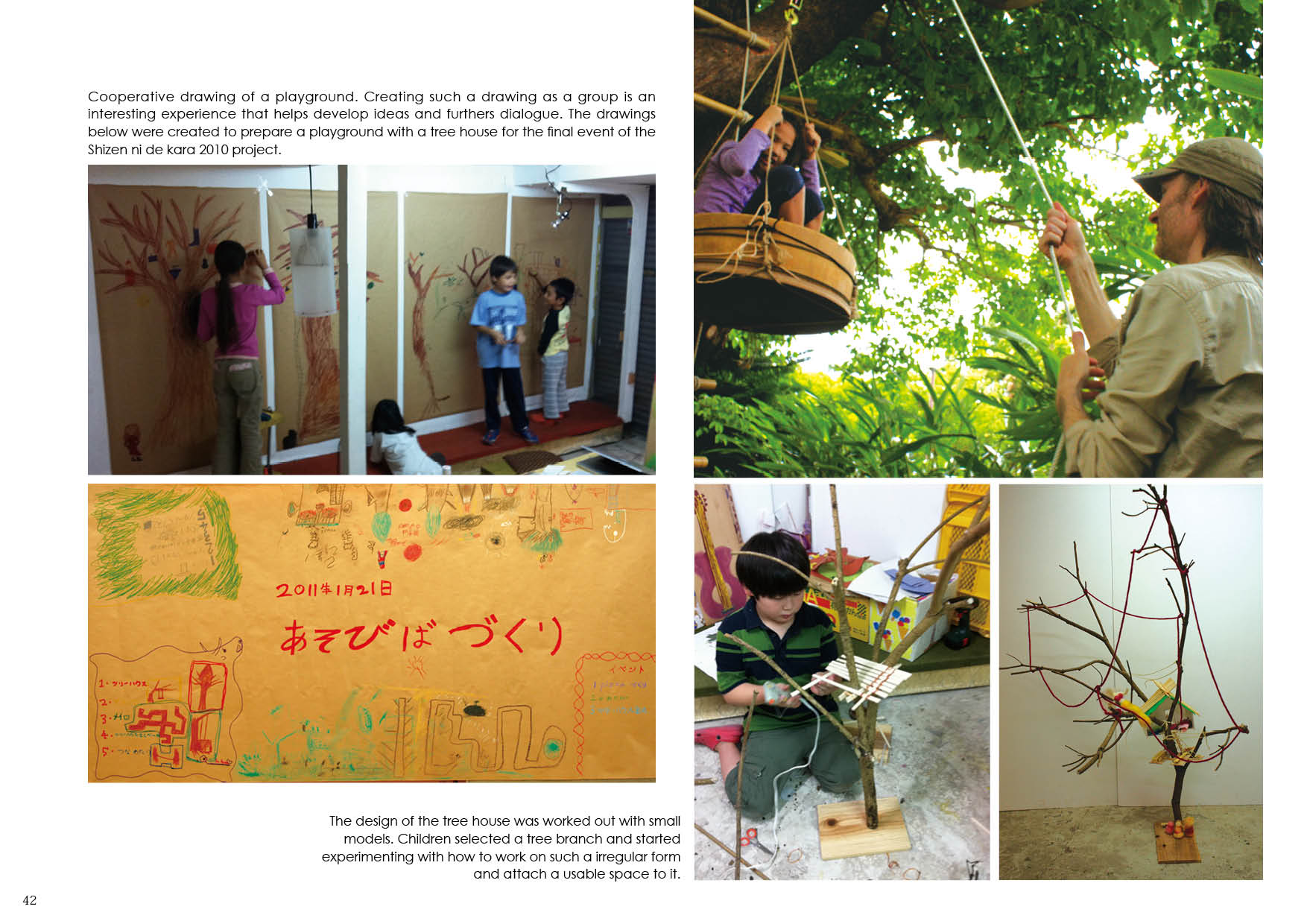
Shizen ni de kara: Natural Playgrounds 42
Appendix
Bibliography 46

本研究は琉球大学 SDGs 社会課題解決研究プロジェクト経費の助成を受けたものです